A Film Club Evening Built Around Place
Plan a film club discussion about place with a focused screening, clear host roles, and practical prompts that help every viewer take part without a lecture.
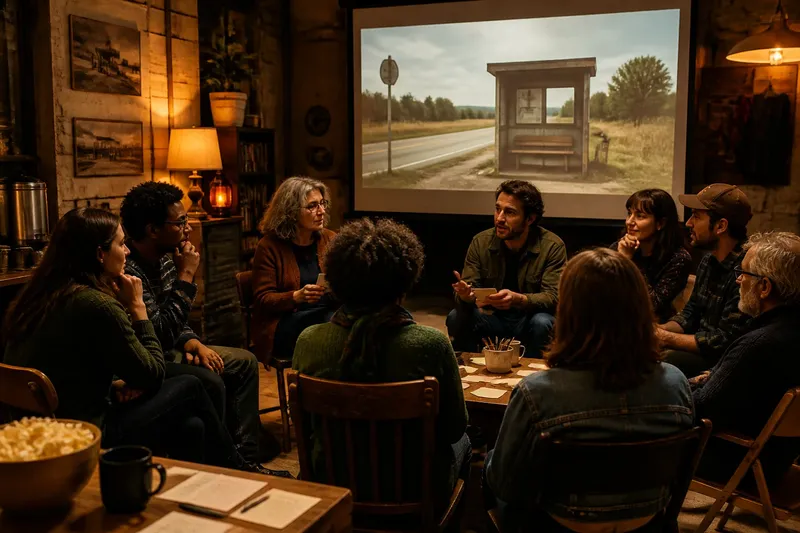
How do you host a film club discussion about place without letting it turn into a lecture or a debate over who knows the region best? Give the evening a clear shape: choose a film or sequence, make the room comfortable for conversation, and invite viewers to respond to one another as well as to the screen.
For films set in the American South, a porch, church hall, roadside store, or town square can spark memories and strong reactions. The host’s job is not to settle what a location means; it is to help the group share the space, manage the conversation, and leave with a few questions worth carrying into the next screening.
Build the evening around a film club discussion about place
Choose a film with a location the group can remember and talk about without needing specialist knowledge. A recurring setting can give viewers a natural point of comparison, while a self-contained scene can suit a shorter meeting. Decide whether everyone will watch the full film together or arrive having seen it in advance.
Make a simple host sheet with the film title, the selected scene or setting, a short plot note for newcomers, and three prompts. Keep the prompts focused on participation rather than interpretation: What stayed with you? Which moment would you like to revisit? What question did the film leave open?
Say you are hosting an invented discussion of a film that returns to a rural bus stop. You choose the full film for the group, write down the stop’s two appearances, and prepare a prompt about what changes between them. At the meeting, viewers can refer to the repeated location without the host having to deliver a prepared reading.
Set up the room for shared attention
Arrange chairs so people can see one another, not only the screen. Check that everyone can hear the dialogue, and keep a few pens and index cards nearby for people who prefer to collect a thought before speaking. If you screen a clip, test the playback and have a fallback plan, such as a brief verbal recap, in case the file or connection fails.
Agree on a few ground rules before the film starts. Ask people to avoid talking over the screening, flag spoilers for anyone who has not seen the full film, and speak from their own experience rather than being asked to represent a town, race, class, or region.
- Sound: If dialogue is hard to hear from every seat, move chairs closer or adjust the speaker before starting; otherwise, begin the screening as planned.
- Seating: If a viewer cannot see the screen or other participants, rearrange the chairs; otherwise, keep the circle open.
- Playback: If the selected scene will not load, use the prepared recap or switch to the full film; otherwise, play the scene once without interruption.
- Access: If someone needs captions or a quieter seat, enable captions or offer a seat away from the speaker; otherwise, leave the setup unchanged.
- Spoilers: If newcomers have not seen the ending, ask the group to avoid later plot details; otherwise, allow discussion of the whole film.
- Notes: If participants want a private way to gather thoughts, hand out index cards; otherwise, start with a spoken round.
Make the room easy to join before asking anyone to speak.
Give the host a light but useful role
Open with the plan, explain how long the group will spend on the film and conversation, and tell people they can pass on any prompt. Then step back. A host does not need to deliver the most polished reading; the better task is to keep the discussion welcoming, specific, and balanced.
Use a round-robin opening if the group is large or several people tend to speak quickly. Invite each person to share one response in a sentence or two, with the option to pass. In a smaller group, ask the question and let a brief silence stand before filling it.
If one person has visited a similar place, welcome that contribution as personal context, not as a ruling on what the film or the region must mean. If discussion becomes a series of long speeches, ask the next person to respond to a point already raised.
Keep the conversation welcoming when interpretations differ
Not every viewer will respond to the same scene in the same way. One person may connect a setting to family memories; another may focus on the film’s humor or pace. Let each person explain their own response without requiring agreement.
When a comment becomes a claim about an entire community, gently narrow the scope: “What in this film led you there?” or “Does another scene complicate that impression?” These questions help the group discuss the film without turning an individual attendee into a spokesperson.
If a topic feels personal or tense, pause and restate the shared ground rules. A short break can help; so can inviting the group to return to a question about the film rather than asking anyone to defend a lived experience.
Close with a question that gives the group somewhere to go
Ask each person to name one moment they would like to remember, revisit, or discuss with someone who was not at the screening. If you keep a club notebook, record the film title and the questions the group wants to carry forward, not a verdict on the setting.
A film club discussion about place can be memorable because people make room for one another, not because they reach a single interpretation. Before the next meeting, note which prompt brought more voices into the conversation and which part of the setup needs adjusting; that gives you a practical starting point for hosting again.
What should a host prepare before the screening?
Should the group watch the full film or a selected scene?
Choose the full film if newcomers need the story’s context, or a scene if the meeting has a narrow focus and everyone can follow it. Tell participants which format to expect before they arrive.
How can quieter viewers take part?
Offer a pass-friendly opening round, index cards, or a moment to think before anyone speaks. Avoid putting a quiet participant on the spot by asking for a personal account.
What should the host do if conversation stalls?
Let the silence sit briefly, then offer one prepared prompt or invite people to name a moment they remember. If that still feels difficult, take a short break and return with a simpler question.
How should the host handle disagreement?
Ask each person to explain their own response and keep the conversation from becoming a contest over who speaks for a region. If the discussion turns personal, restate the ground rules and offer a pause.